
identity check by mastercard
#fintech #fortune500

Designing biometric authentication for the future of online payments
Overview
Passwords have long been one of the biggest sources of friction in online commerce. Forgotten credentials, repeated login attempts, and complex security rules often interrupt the checkout experience.
For Mastercard, this represented both a security problem and a business opportunity.
Mastercard Identity Check introduced biometric authentication to online payments, allowing shoppers to verify transactions using facial recognition or fingerprint scanning instead of passwords.
As Global Creative Director for Experience Design, I helped lead the design of the consumer experience for this new authentication model, focusing on creating a flow that felt simple, secure, and trustworthy for millions of users encountering biometrics for the first time.
The result helped pioneer what became widely known in the media as “selfie pay.”
My Role
Global Creative Director, Experience Design
Biometric authentication UX
Fintech interaction design
Secure payment flow design
Research-driven product strategy
Information architecture
Rapid prototyping and concept testing
Multidisciplinary team leadership
Led the experience design for the biometric payment verification journey across mobile devices.
Results
350 Million
customers use MasterCard Identity Check annually
92%
rate MasterCard Identity Check as more convenient than passwords
90%
of cardholders would like the biometric identification system to replace passwords
83%
trust MasterCard Identity Check is more secure than passwords
75%
of users trust biometrics will reduce fraud
60%
would strongly recommend MasterCard Identity Check to family or friends
Understanding the problem
Passwords create friction at the worst possible moment in the customer journey — the checkout.
Industry research showed that more than 30% of online purchases are abandoned because users cannot remember their passwords.
At the same time, password reuse creates significant security risks, with more than half of users repeating similar credentials across multiple services.
While in-store payments had already evolved through contactless cards and mobile wallets, online checkout experiences were still heavily dependent on outdated authentication methods.
Consumers increasingly expected the same simplicity online that they experienced in physical stores.
Designing for trust in biometrics
Introducing biometric authentication presented a new challenge.
For many consumers, facial recognition and biometric verification were unfamiliar technologies. The experience needed to overcome both technical friction and psychological hesitation.
Our research revealed two key concerns:
Security — users needed to feel confident their identity was protected
Trust — the process needed to feel safe and understandable
Designing for trust meant creating a flow that felt transparent, predictable, and quick.
Visual cues, clear messaging, and minimal interaction steps helped reduce uncertainty while guiding users through the process.
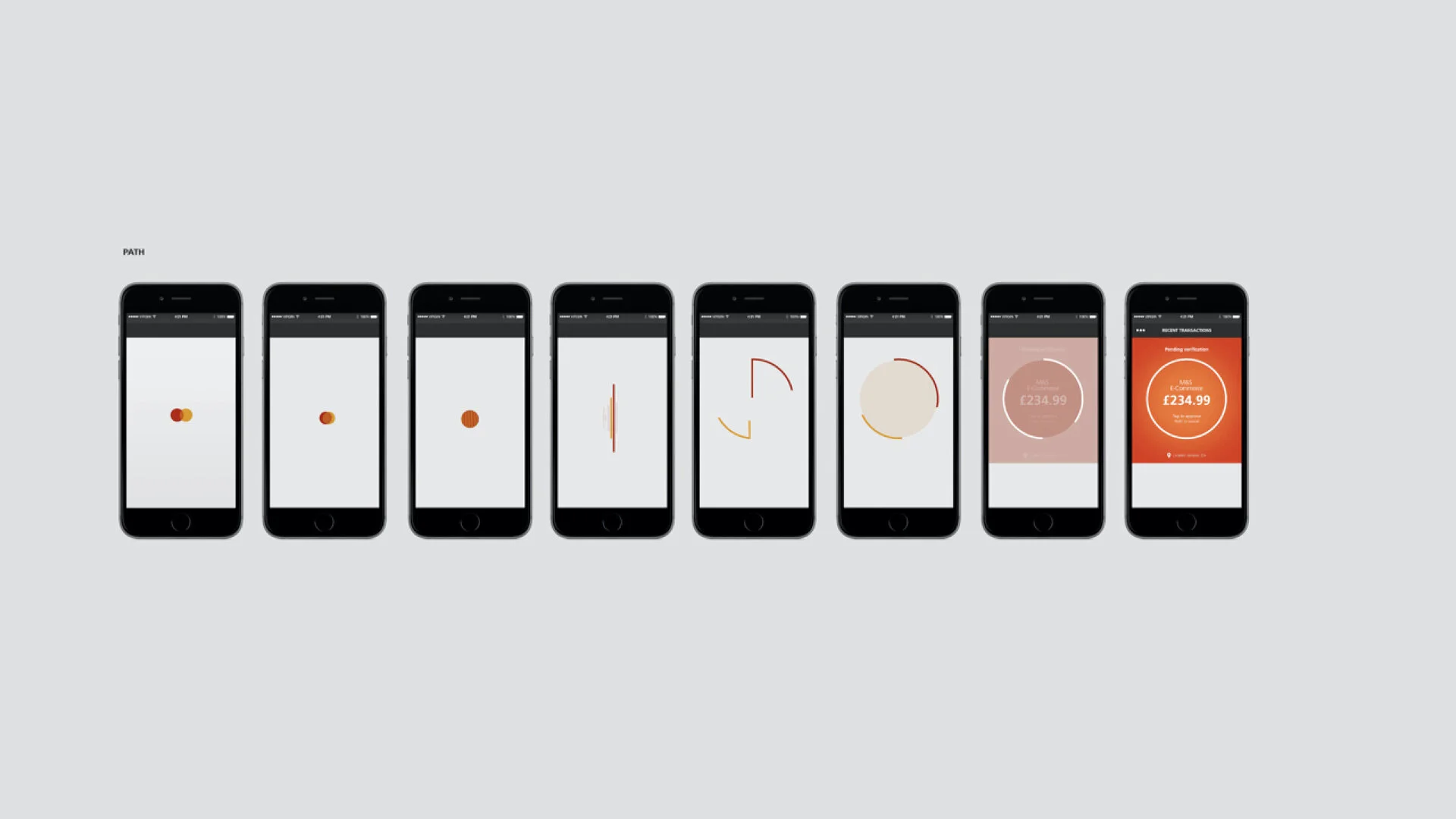
A key innovation within the facial recognition flow was “the blink” — a simple liveness detection mechanism that required users to blink during selfie verification. This small interaction played a critical role in preventing spoofing (such as using photos or static images) while also reinforcing user trust. By turning a complex security requirement into a natural human gesture, the experience balanced fraud prevention with ease of use, making biometric authentication feel both intuitive and secure.



Creating the biometric checkout experience
The solution was designed to integrate seamlessly into existing online checkout flows.
When a purchase requires authentication, the user receives a secure prompt on their mobile device. They can then approve the payment using either:
Fingerprint authentication
Facial recognition (“selfie verification”)
The process removes the need for passwords entirely. Instead of relying on something the user knows, authentication is based on who the user is.
This shift simplified the experience while maintaining strong security protections.
Designing for simplicity at scale
Because the service needed to work across multiple markets and devices, the design emphasised clarity and consistency.
The biometric verification flow was designed to:
Work seamlessly alongside existing checkout processes
Minimise interaction time during payment approval
Provide clear feedback during authentication
Reassure users about security and privacy
These decisions helped ensure the system felt natural and reliable for first-time users.
Global adoption
Following launch, Identity Check rolled out across 37 countries, introducing biometric authentication to millions of cardholders.
The media response was significant, with widespread coverage highlighting the new “selfie pay” experience.
More importantly, consumer research showed strong trust and satisfaction with the new system, reinforcing biometrics as a viable replacement for traditional passwords.
Lessons learned designing secure biometric payment experiences
Designing secure payment experiences revealed several important lessons.
Security must feel simple.
Even the most advanced security systems fail if the experience feels confusing or slow.Trust is a design problem.
Clear communication and predictable interactions are essential when introducing unfamiliar technology.Checkout is a critical product moment.
Reducing friction at this stage directly impacts conversion and customer satisfaction.
These principles continue to influence how I approach authentication and trust-based product design.
Team
Jason Connolly, Kalpesh Rathod, Yandis Ying
Agency / Launch
SapientNitro / 2015
Let’s work together
I'm always open to:
Founding Product Designer or Product Design Director roles
Fractional design leadership for early-stage startups
Advising teams building AI-native products
If you're building something ambitious, I'd love to hear about it.