Making NHS appointment booking faster with AI-powered clinical triage
Summary
Healthtech-1 built Bookable Navigator, an AI-powered medical triage tool and Class 1 medical device for NHS GP practices. Using a clinical knowledge library built by general practitioners (GPs), the tool asks patients dynamic questions, routes them to the correct care pathway, and automatically books appointments. I led the product strategy, experience design, prototyping, and design system, working with the engineering team through launch and supporting practice adoption.
Date: March—October, 2026
Role: Founding Product Designer
0→1
Outcomes & Key Results
Reduced patient triage time from 60 seconds to 30 seconds.
Reduced the required user clicks to book a patient from 7 clicks to 2 clicks, compared with competitor products.
Onboarded more than 15 GP practices.
Supported practices that process 3,000–8,000 triage requests per week.
Launched v1 of the triage inbox as a Class 1 medical device in 2 months.
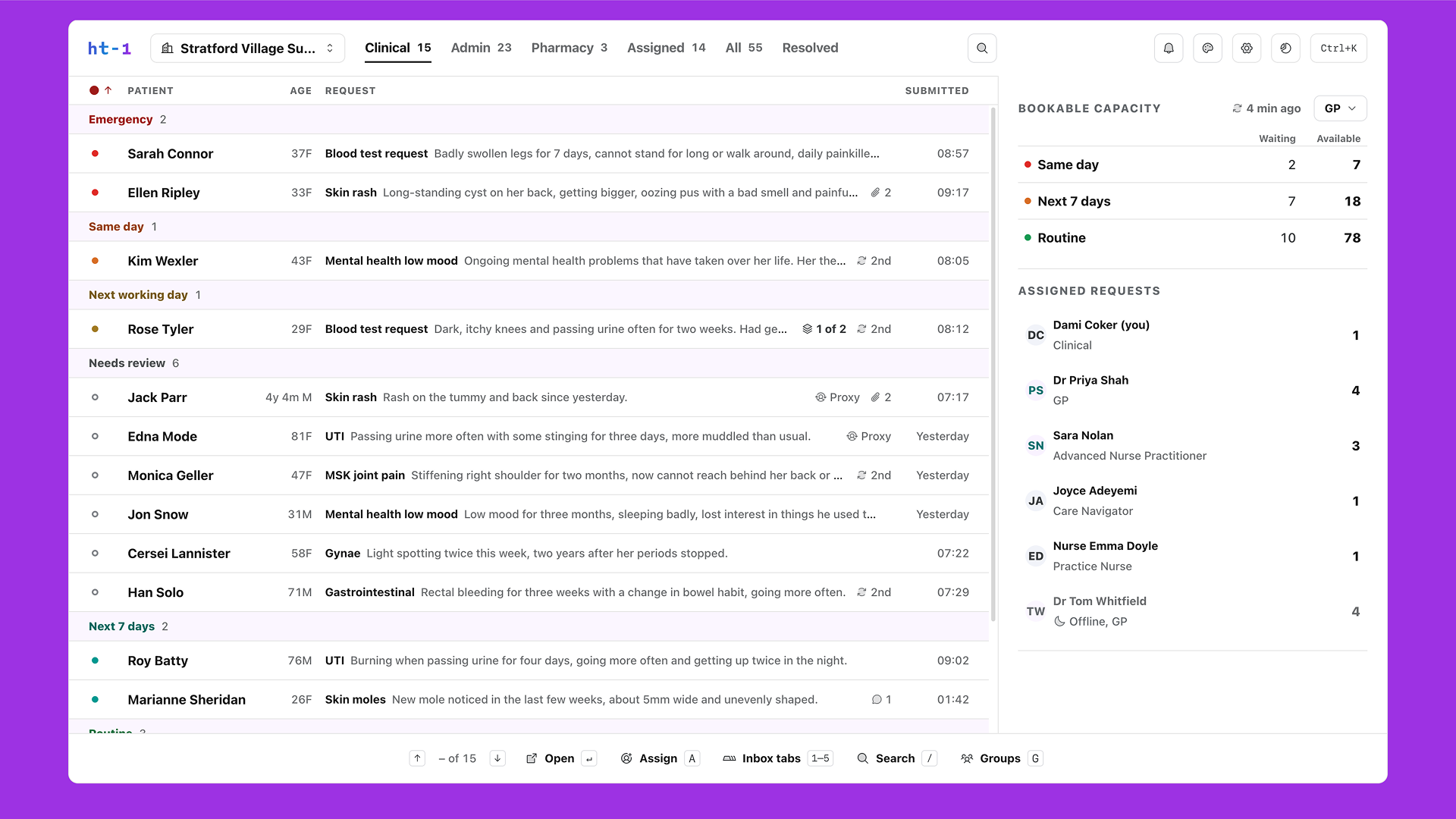
Patient requests are automatically allocated to the right team inbox where practice staff can see a bird's eye view of their day.
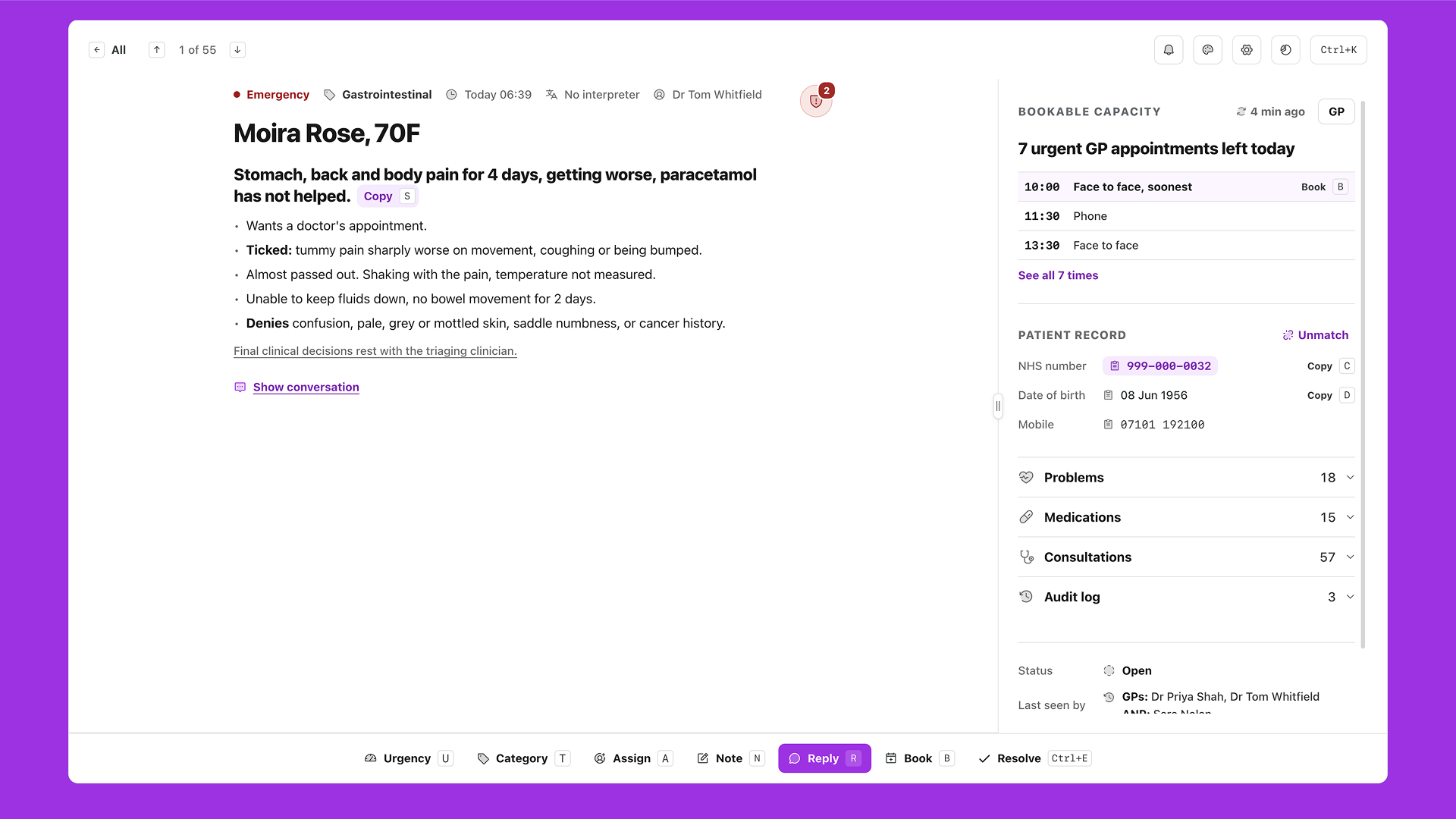
On a request triage staff can take a variety of actions to resolve a request quickly and safely with a wealth of patient health record info at their fingertips.
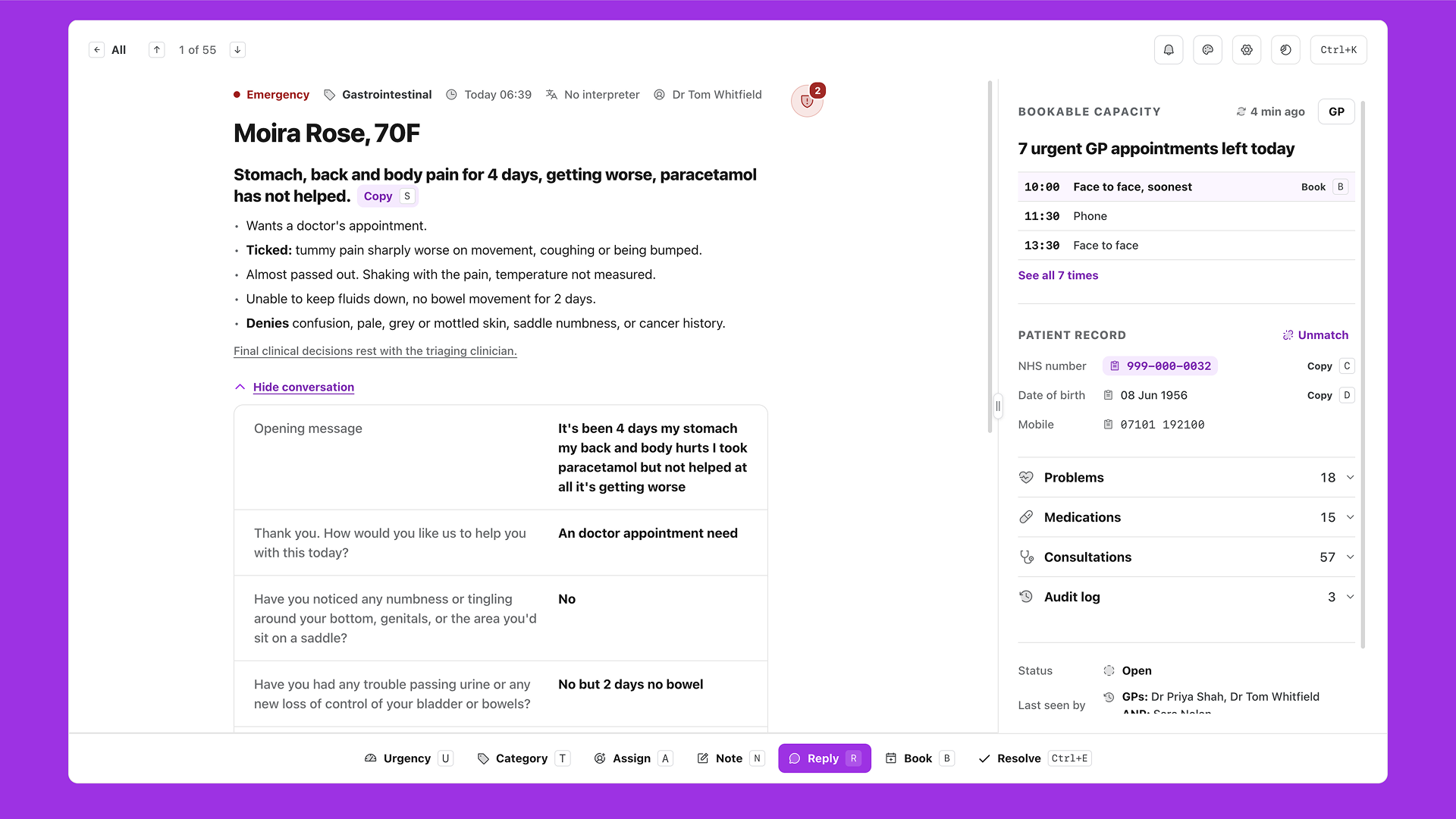
If a triager needs more info about a request they click a toggle to review the full conversation between the patient and our AI engine.
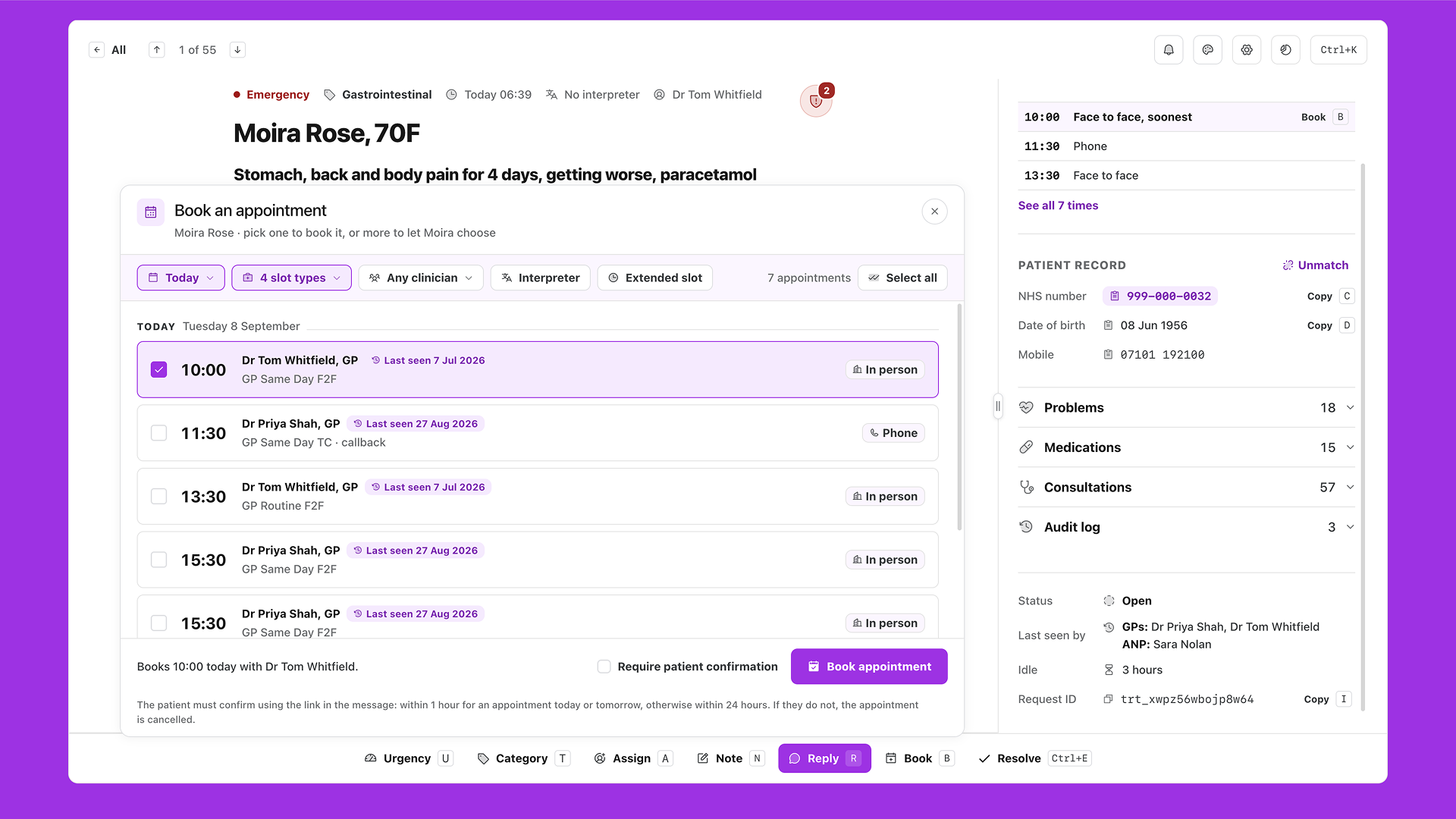
Our dynamic booking feature takes into account staff capabilities and urgency to book a patient the right care, the first time.
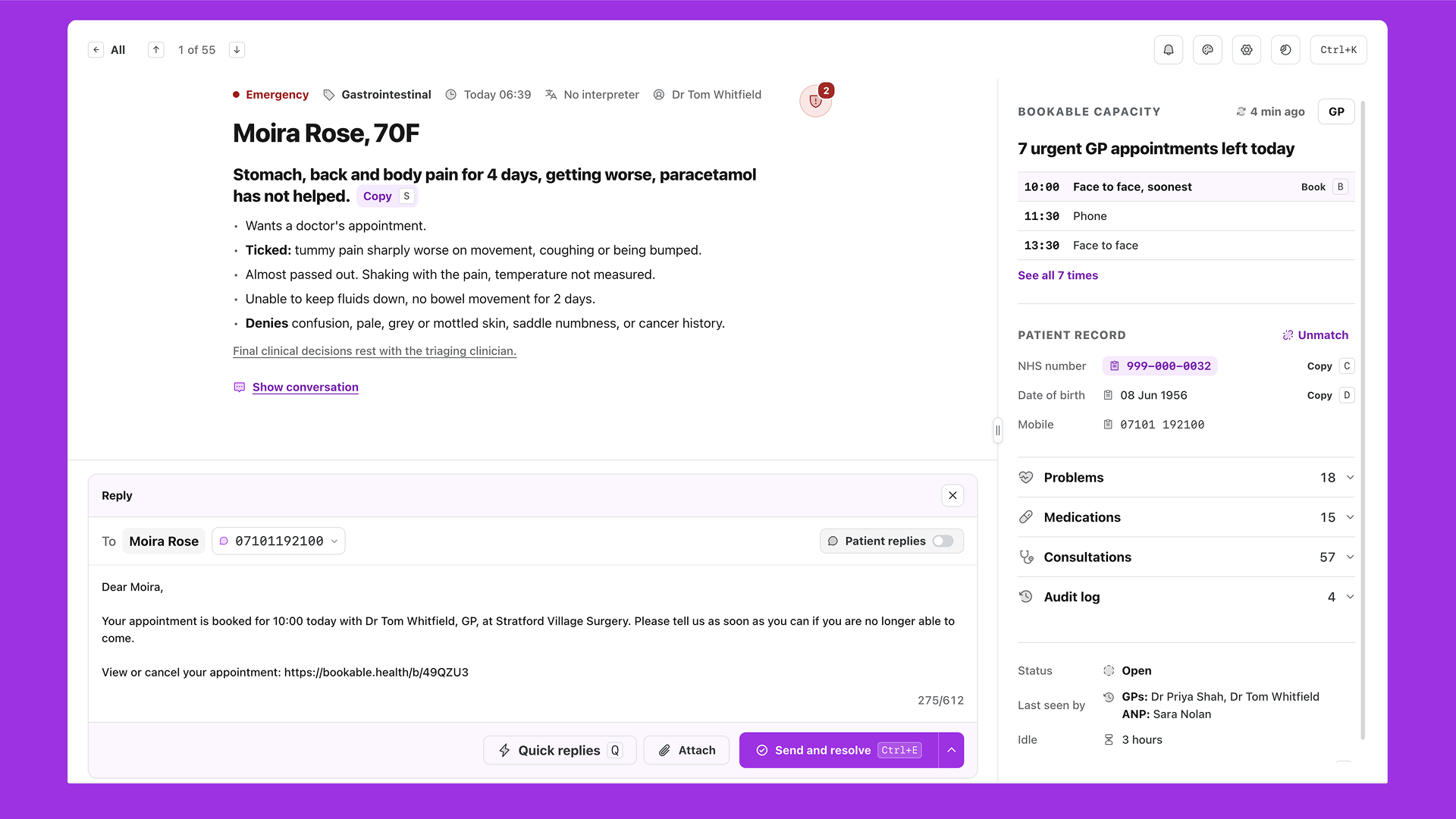
Staff can then link a patient to their appointment via their stated contact preferences.
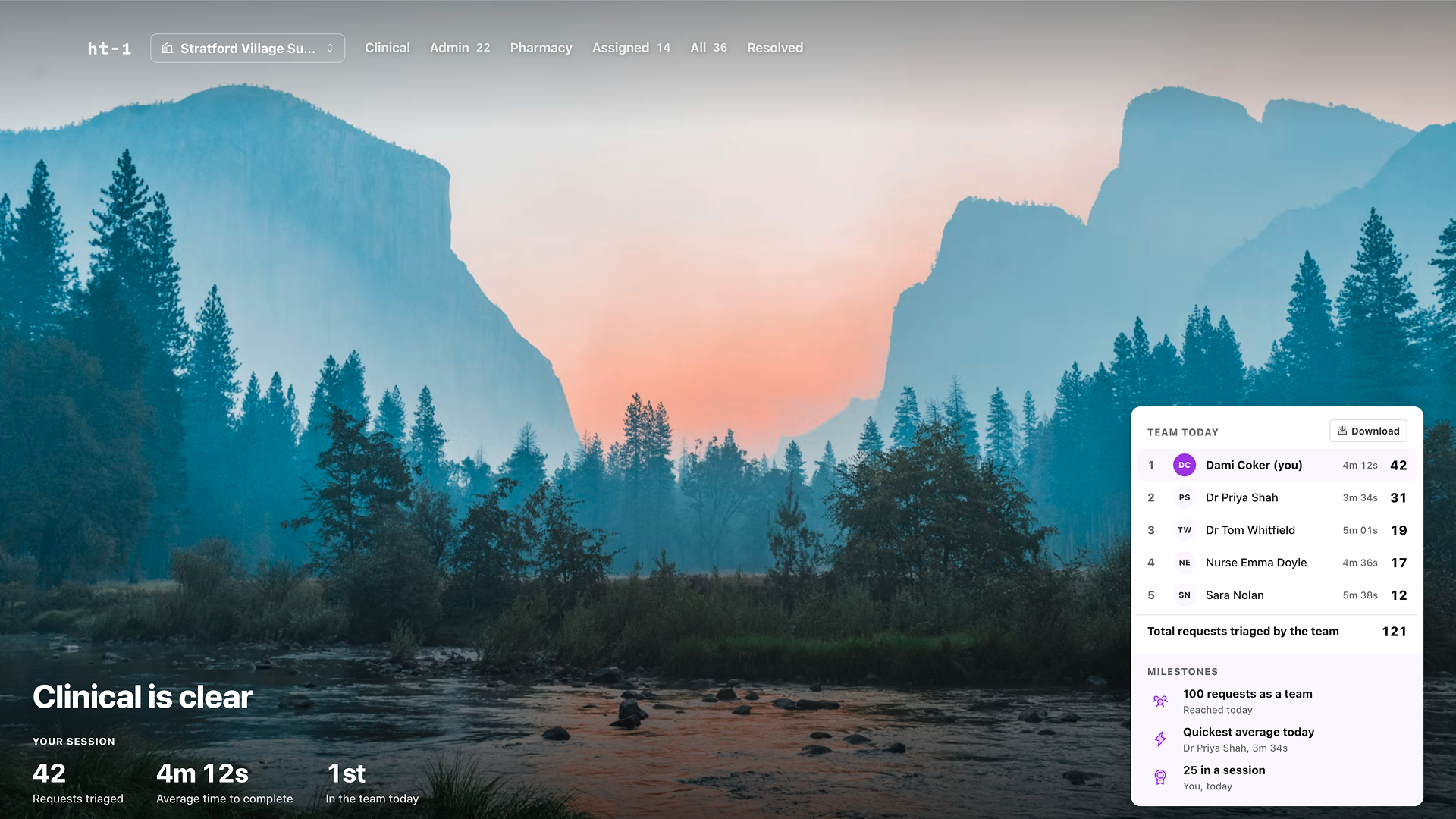
Upon clearing a queue a triage team gets a well-earned moment of zen.
What I did
Defined the product strategy: Planned how clinical AI supports patient triage, automatic booking, and inbox prioritization in NHS primary-care workflows.
Designed the complete experience: Led product, interaction, and visual design for patient triage, practice configuration, appointment booking, and the triage inbox.
Prepared the product for release and adoption: Prototyped workflows, wrote software code, built the design system, and collaborated with engineers through launch. Created training materials and provided direct operational support to active practices.
What I learned
In clinical workflows, automation builds trust only when it focuses human oversight, not when it removes human oversight. The design separated reliable system tasks from tasks that practice teams must review. The system showed clear logic and clear next actions.
Product adoption is a core part of product design. Successful deployment required co-creating training materials, supporting teams in active practices, and adapting workflows to operational care delivery.